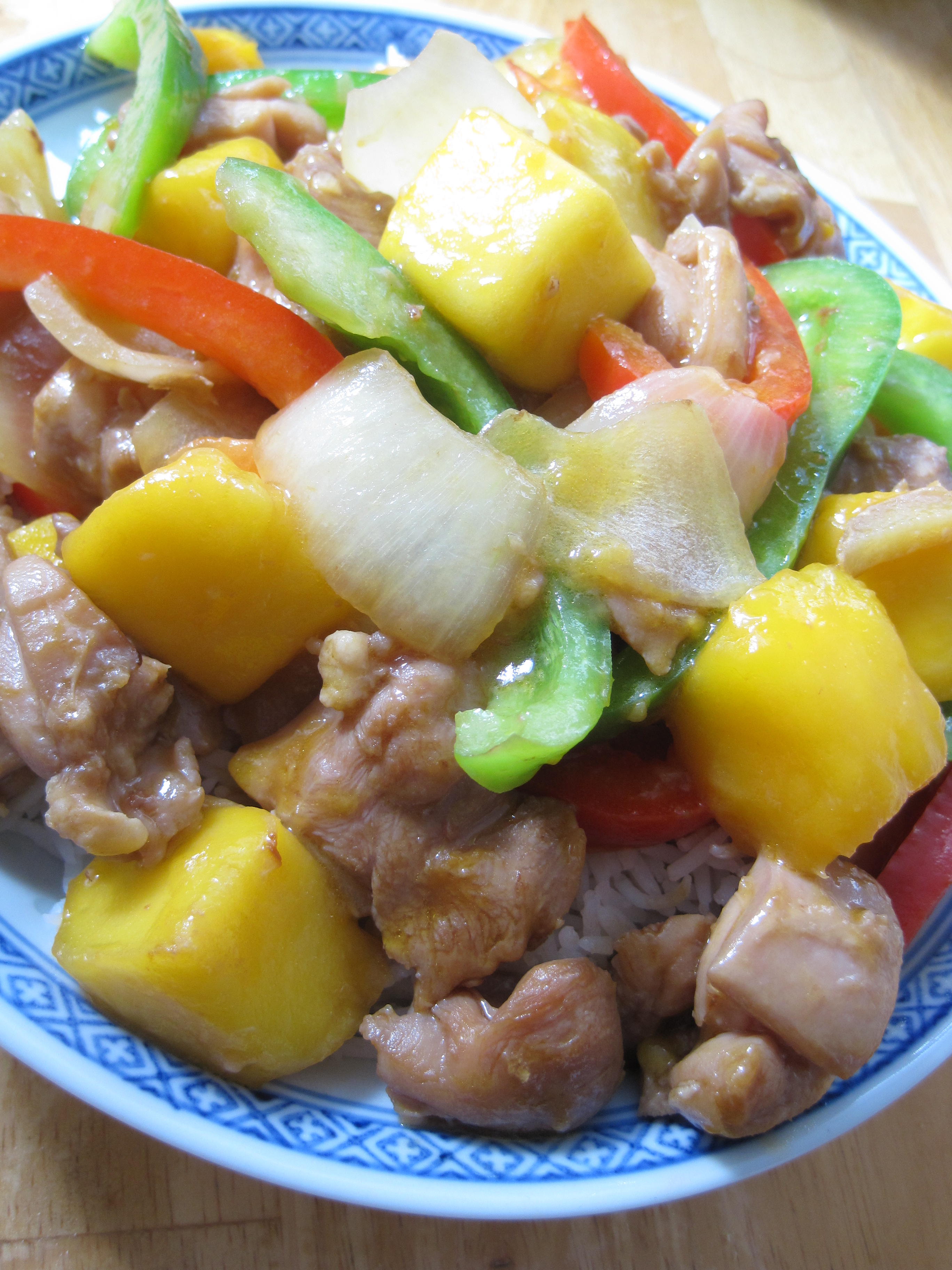
My favourite mango chicken dish is surprisingly simple and is served at the restaurant, Magic Wok in Markham, ON. They stir fry pieces of chicken with slices of fresh mango and ginger and serve it in a delicious basket made from deep fried shredded taro. I’m on the look out for the properly shaped Chinese wire basket/strainers so that I may recreate this restaurant style dish at home. In the meantime, I make a homestyle chicken and mango stir fry with bell peppers for added crunch and colour. Feel free to use whatever vegetables you happen to have on hand.
Posts Tagged ‘Chinese food’

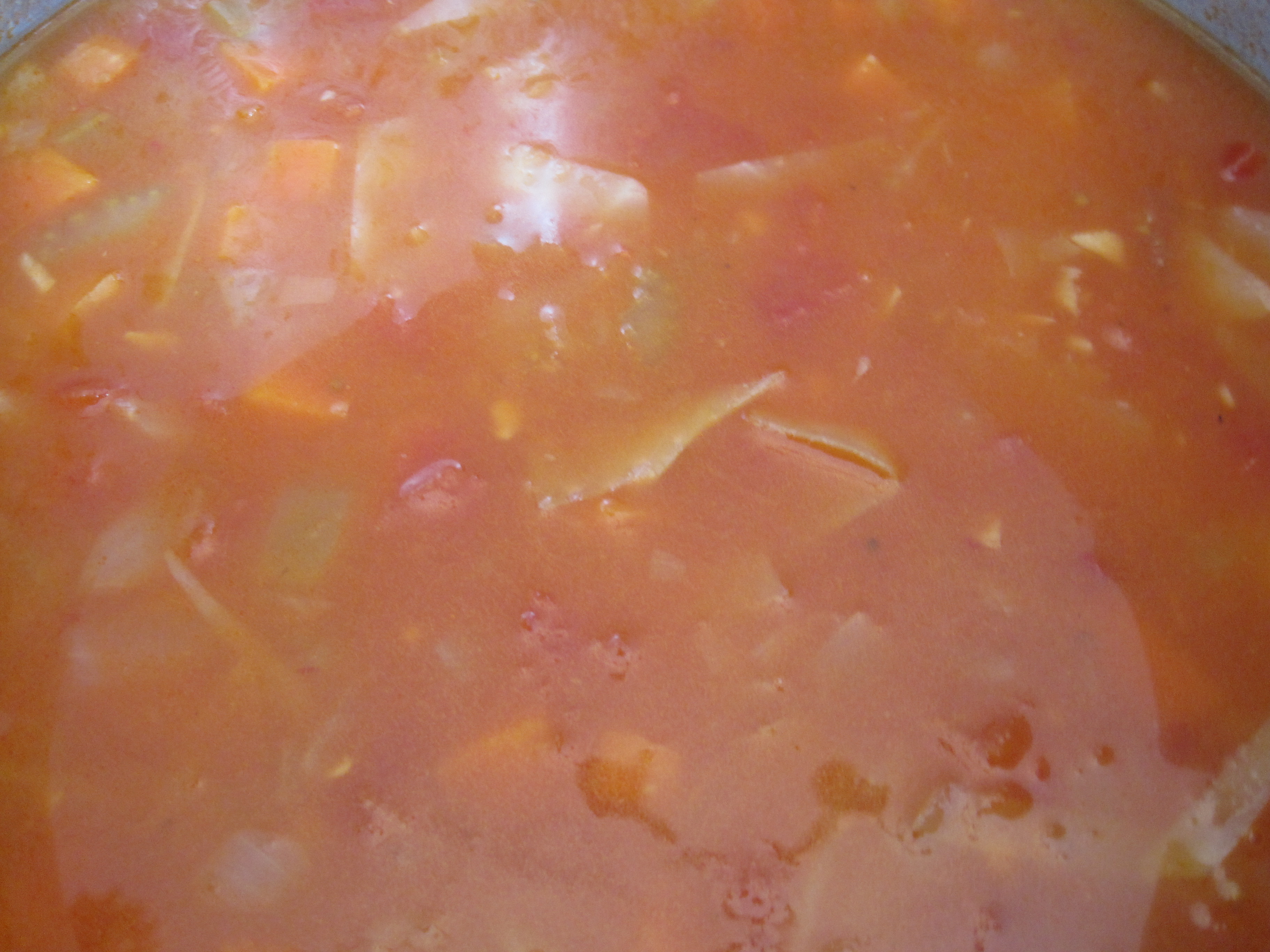
Chinese Borscht Recipe (Lor Sung Tong)
In Asian, Soups, Soups and Salads on June 2, 2011 at amOriginating from Ukraine, borscht is a soup that is made with beets as the main ingredient. Surprisingly, you may find borscht or even Russian borscht (“loh sung tong” / “lor sung tong”) on the menus of some Hong Kong style diners. The borscht served in these Chinese restaurants is more like a hot and sour vegetable soup with tomatoes and/or tomato paste as the main ingredient(s). It’s delicious and my siblings and I love it. In fact, every time my brother sees me, he asks me when I’m going to make more of this soup for him. I made it for my housemate recently and she asked for the recipe. Every Chinese restaurant makes their borscht slightly differently, so feel free to add whatever vegetables you like. The following recipe was created to taste just like the soup that’s served at our favourite Hong Kong style diner in Markham, ON.
Candied Tamarind
In Asian Desserts on May 5, 2011 at pm
I’ve used tamarind paste for southeast Asian and Indian cooking. (See more info on cooking with tamarind here.) I like its unique, tart taste and, although I try periodically, it is too strong and too sour [for my taste] to eat raw. So when I discovered candied whole tamarind (sold as “sweet and sour tamarind”), I was very eager to try it. I love the naturalness of this chewy, not-so-sweet candy, because it only contains 3 ingredients: tamarind fruit, sugar, and salt. It’s perfect for people with a lot of food allergies or restrictions. The acquired taste of the tamarind is subdued in this candy, so it’s a great way to introduce someone to this fruit. Just be sure not to bite into the rock hard seeds. Luckily, they are large and easy to spot in this pod-like fruit. Note that the candied whole tamarind (shell removed) is not the same thing as the more commonly available, chewy balls of tamarind candy that are made with tamarind juice, sugar, and water. I prefer candied whole tamarind because it is lower in sugar content and processed more naturally. Unfortunately, it seems to be impossible to find fresh tamarind where I live. So for now, I’ll resort to buying the store bought candy.
How to Make Chinese Rice Wine
In Drinks, How-To, Other Asian Foods on April 14, 2011 at amCooking with Alison’s Grandma (Part 1 of 4)
We had a family reunion in NYC to celebrate my grandma’s 80th birthday in March, 2011. While I was there, I asked her to show me how she makes some of the family’s favourite dishes. This is how she makes Chinese rice wine. It is surprisingly easy to make!
Chinese Steamed Pork Belly with Muy Choi
In Meat and Eggs on March 30, 2011 at amI remember the first time I tried this dish. It was at Magic Wok Restaurant in Markham, ON and my family liked it so much that for a long time after that, we ordered two of them every time we went. The sauce and muy choi are a combination of salty, sour, and sweet flavours that are delicious on plain white rice. The meat is tender from a multi-step cooking process. But the best part is the rind. The fat gets broken down into a soft and slightly gummy texture. Since most of the fat has been boiled and steamed out of the rind, you get all of the deliciousness without the grease. If you make this a day in advance, you can remove even more fat after it chills through in the refrigerator.

Steamed Minced Pork (3 Variations)
In Meat and Eggs on February 16, 2011 at amIn many Chinese homes, this quick and simple dish is served with rice and other dishes for dinner. I have provided recipes for 3 different variations, but you could use any ingredients and any combination that you like. My favourite combination is the steamed minced pork with salty duck eggs. (I will load a photo the next time I make it.)
Steamed minced pork with muy choi (Chinese salted mustard) is shown below. Note that traditionally, the meat is seasoned with soy sauce and the muy choi is simply scattered over the top. However, I’ve reduced the sodium of this dish by omitting the soy sauce and mixing the muy choi (which is already salty) in with the meat.

Chinese Bakery Hot Dog Buns Recipe
In Baked Bread on February 8, 2011 at amChinese bakeries always have a great variety of buns, cakes, and cookies to choose from. I love Hong Kong style bakery buns because the brioche-like bread is super soft. One of my favourites is the hot dog bun and luckily, it’s very easy to make. Although it is time consuming to make the dough, most of the time is spent waiting for it to rise. I tried three different recipes for Chinese / Japanese style bread and the water roux method (tang zhong) was by far the best. My family couldn’t get enough of these. 🙂 These are freezer friendly so you can make your efforts last.
Depending on the bakery, I’ve seen hot dog buns shaped in one of two ways (photos below). Instructions for both have been provided.


Asian Bread Making Technique (Soft Chinese / Japanese Bread)
In Baked Bread, Breads on February 7, 2011 at amJapanese and Chinese breads are well known and loved because they are deliciously soft and fluffy. When Yvonne Chen published The 65 C Bread Doctor, she made the water roux method (tang zhong) very popular. I tried two other highly rated asian bread recipes before attempting this and the water roux method (tang zhong) was, by far, the best. My family absolutely loved it. This results in bread very similar to those sold in Hong Kong (Cantonese/Chinese) bakeries. By changing the way you shape the bread and by adding various ingredients, you can use this as your base for all sorts of buns and breads. For example, see my instructions for Chinese bakery hot dog buns here. Coming soon: recipes for Chinese bakery pineapple buns and cocktail buns.
How to Make Bread Flour and Cake Flour Substitutions
In How-To on February 5, 2011 at am
I have containers upon containers (upon containers) of different dry ingredients overcrowding my pantry, cupboards, and counter top. I’m embarrassed to admit that they’ve overflowed into closets and random corners of the rest of my apartment too. Just to name the different types of flour that I have: all purpose, bread, cake, whole wheat, stone ground whole wheat, organic whole wheat, semolina, rice, glutinous rice, potato, tapioca, corn (as well as corn meal), corn starch, wheat starch, and vital wheat gluten. I actually have a post card that says “I dream of storage space” on my fridge (photo above). 🙂 So when I discovered simple substitutions for bread flour and cake flour, I was overly excited! haha I love decluttering and now I’ll never have to buy cake or bread flour again. Recipes below.
Curried Beef Brisket, Tendons and Daikon Radish
In Meat and Eggs on January 23, 2011 at am
We love ordering braised beef brisket on rice or soup noodles from Cantonese (Chinese) restaurants and cafes. One of the variations that we like is the curried one. The best parts are the connective tissue and the tendons that get broken down and become soft and chewy. 🙂 (See the plain, braised beef brisket and tendons recipe here.) If you have leftover daikon radish, see here for a list of other recipes.

Braised Beef Brisket, Tendons and Daikon Radish (Chinese Restaurant Style)
In Meat and Eggs on January 21, 2011 at am
We love ordering braised beef brisket (nguw lam / ngow lam) from Cantonese (Chinese) restaurants and cafes. It is served over rice or noodles in soup. The best parts are the connective tissue and the tendons that get broken down and become soft and chewy. 🙂 Although it’s very easy to make, I had failed several times to recreate the restaurant flavour. Then I heard that the secret ingredient is chee hou sauce, so I bought a jar and tried again. It was exactly what I had been missing (other than MSG). The closest substitution that I can think of is hoisin sauce, but chee hou is more acidic, has more punch, and tastes more like fermented black beans. So, I don’t recommend substituting anything for chee hou. (See my curried braised beef brisket and tendons recipe here.) If you have leftover daikon radish, see here for a list of other recipes.
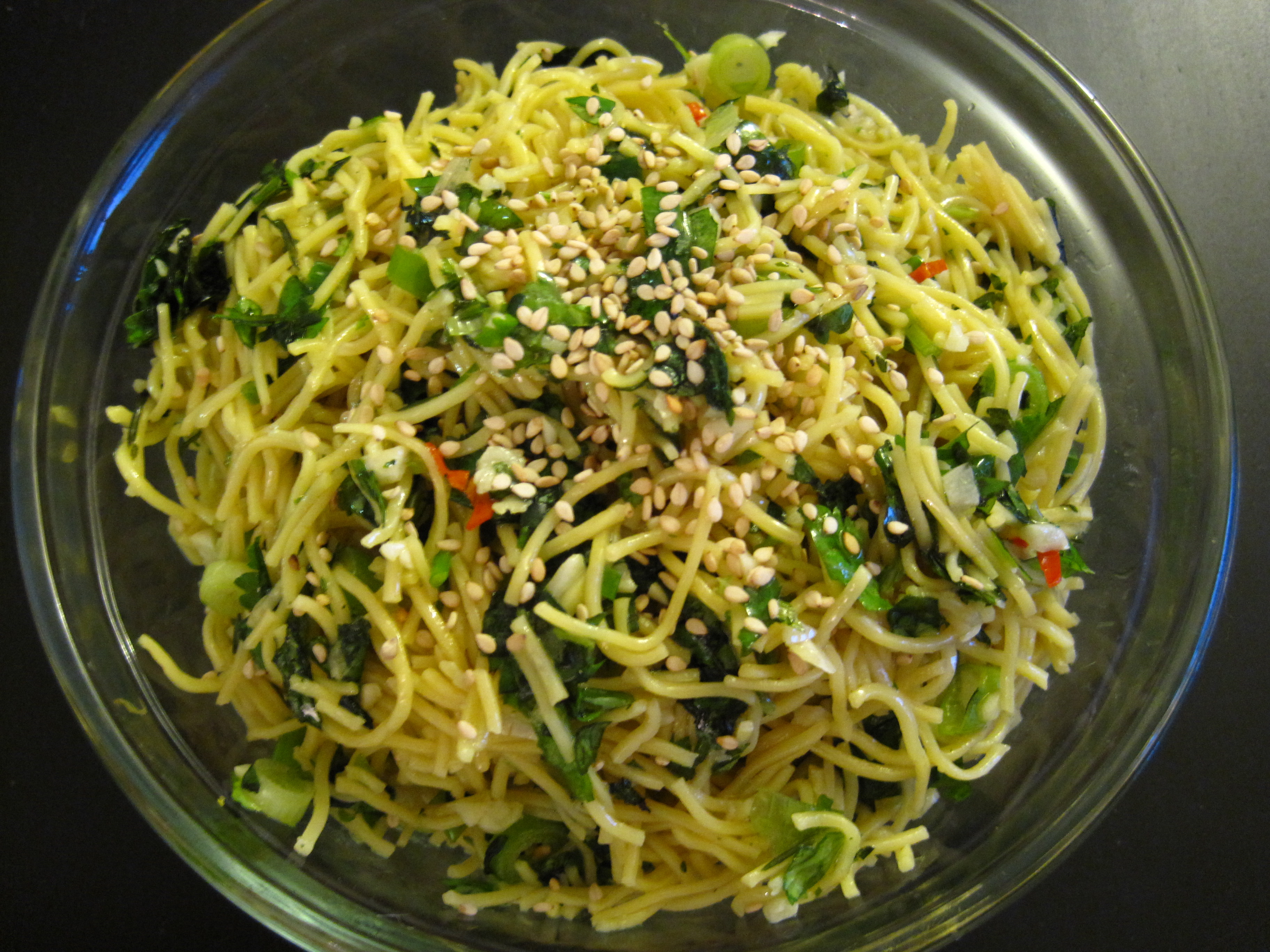
Sesame Noodle Salad Recipe
In Rice and Noodle Dishes, Soups and Salads on December 29, 2010 at amThis is an asian inspired noodle salad that Ed loves to eat. Similar versions of this dish are sometimes referred to as “dragon noodles”. It is served cold or at room temperature and is great for picnics or pot lucks. I love the toasted sesame oil but I have to warn you, the noodles themselves are high in calories! You could easily add julienned and stir fried onions, red pepper, carrots, broccoli florets and/or whole snow peas to this if you wanted more colour and texture.
 Cooking with Alison