This is incredibly easy to make and tastes just like the siu yuk (roast pork belly) that you buy at the Chinese restaurants and grocery stores. I suggest buying the meat from an Asian grocery store because it is much much cheaper there. Make sure you buy the boneless pork belly with the skin/rind on. Pork side also works. You want to choose a cut of meat that has an even thickness so that the rind cooks evenly, otherwise sections of the skin will burn. But if this happens you can always scrape the burnt parts off with a knife before serving. I tested three different methods of making crispy siu yuk. The simplest method involved brushing oil onto the rind prior to baking; the second method involved brushing the skin with vinegar before drying it out in the fridge; and the third method involved scalding the rind with vinegar and boiling water prior to refrigeration. From my experience, the rind that had been brushed with vinegar crackled the soonest. Scalding the rind resulted in a very crunchy, but tough, skin. I have posted the method that, in my opinion, was the best.
Posts Tagged ‘Chinese food’
Taiwanese Three Cup Chicken
In Meat and Eggs on April 23, 2010 at pmThis dish is called three cups because it is traditionally made with equal proportions of three main ingredients: soy sauce, sesame oil and rice wine. It is a one pot dish that is flavourful and very easy to make. Although the authentic version has thai basil in it, I have also made this dish without it and it still tastes great.
Stir Fried Beef and Enoki Mushrooms
In Meat and Eggs on April 18, 2010 at amI first tried this combination in a small Chinese restaurant in Markham, ON. It’s incredibly simple and the sauce makes it great with rice, so I recreated it at home.
Hot Pot Dipping Sauce
In Other Asian Foods on April 14, 2010 at pmEating Chinese “Hot Pot” is when everyone cooks their own food in a large pot of boiling water that is heated from below and placed in the middle of the table. The pot has to be heated throughout the meal by flame or an electric burner to keep the temperature of the water at a boil. Since different foods require different cooking times and since everyone is putting new raw food in and taking cooked food out at all different times, it’s important to keep the water hot enough to kill any bacteria. As long as your water keeps boiling, you have nothing to worry about, so don’t let this scare you out of trying hot pot 🙂 Oh and don’t forget to keep two sets of utensils separate, one for handling raw food and one for removing and eating the cooked food. I Love eating hot pot! The water is often flavoured with a soup base (I prefer the spicy variations). Typically, you have a selection of thinly sliced raw meat (ie. beef, pork, lamb), raw seafood (ie. shrimp, fish balls, squid, mussels), vegetables (ie. mushrooms, daikon radish, lettuce, other chinese veggies), tofu, beef balls, etc. You can buy meat that has been sliced for the purpose of hot pot in asian grocery stores. You select what you want and then you cook it in the pot. The meats take seconds to cook since they’re sliced so thinly. When your food’s ready, you remove it from the boiling water and eat it with various dipping sauces. Dipping sauces differ widely from region to region in China and are often very flavourful to compliment the blandly cooked food. It is also common to add a whole raw egg to the dipping sauces. I love that but with rising concerns about bacteria in eggs, my family and I are a bit more hesitant to do it now. I haven’t had hot pot in a few years now so I’m not sure if restaurants still supply raw eggs for their dipping sauces.
Congee
In Dim Sum, Rice and Noodle Dishes on April 6, 2010 at pmCongee (jook) is Chinese rice porridge that can be served at any meal time (from breakfast to late night snack). It can be a meal within itself or, if served plain, it can act as the rice substitute when eaten with meat and vegetable dishes. Also, it is kind of like the Chinese equivalent to the Western chicken soup cold/flu remedy. Congee is made by boiling rice in excess water. Depending on the region in China, the texture, wateriness, seasoning, and accompanying side dishes of congee vary significantly. So make it to your taste. I like it all ways but I prefer congee that has been boiled until the rice breaks down, becomes very soft, and results in a slightly watery, semi-thick porridge. Sometimes, I use my immersion blender to give the congee a smooth, homogenized consistency.
The best accompaniment for any congee is deep fried dough sticks (you tiao / yau char kwai). When I’m eating plain congee (on its own and not as a rice substitute), my favourite side dishes are the flavourful and cost effective salted duck eggs (see recipe here), spicy fermented bean curd, preserved vegetables with chili (ie. radish or turnip), pickled lettuce stems, or shredded dried pork (also known as meat floss). I also love ground white pepper in my congee. To make plain congee, use my recipe below but omit the pork and preserved duck egg.
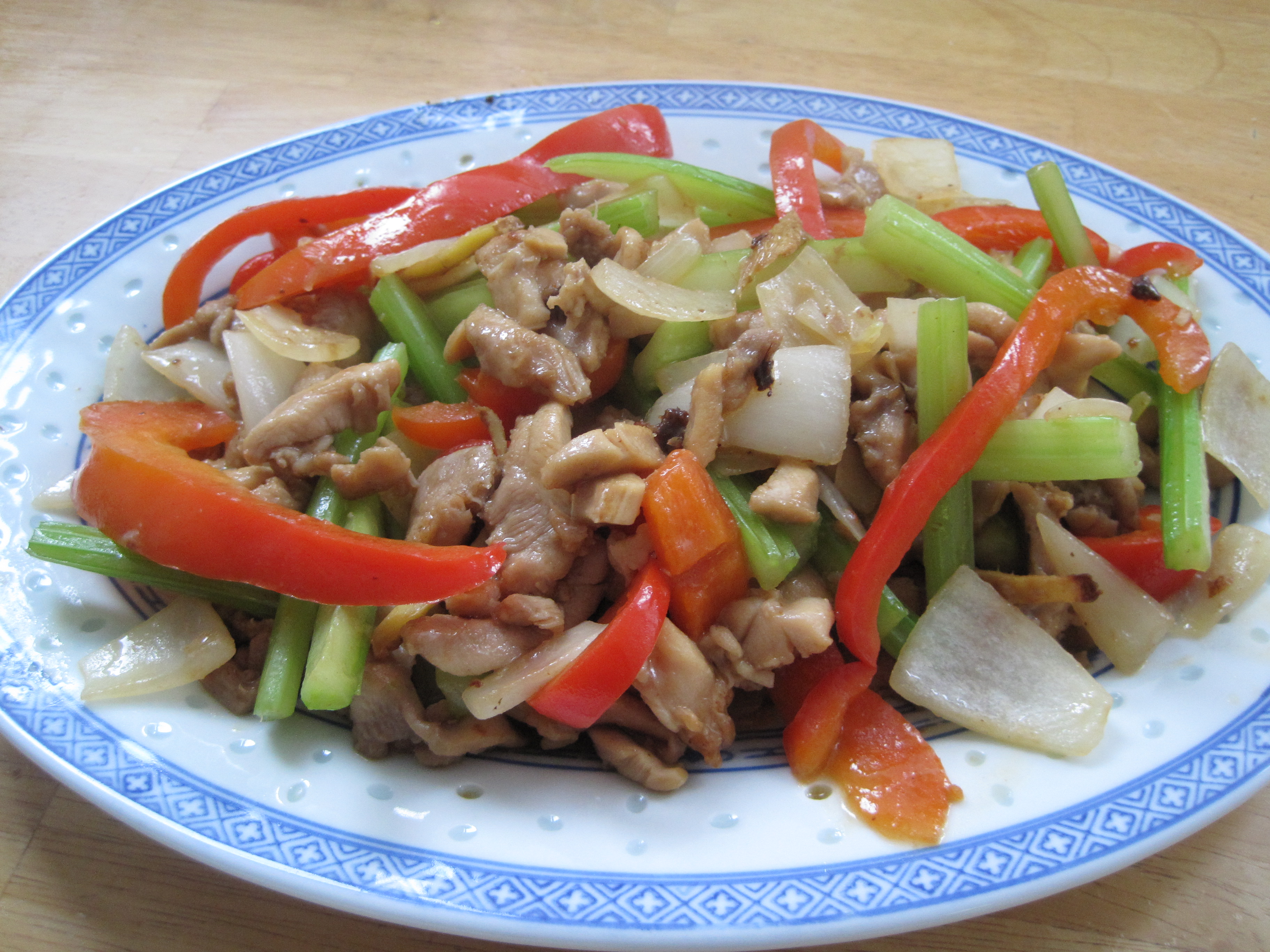
Chicken and Celery Stir Fry
In Meat and Eggs on April 3, 2010 at pmI only ever buy celery when I’m entertaining (ie. veggie platters, dippers, caesars) or when I need it for specific recipes. So I always have trouble finishing a whole bunch of celery. That’s usually when I put it into a stir fry. It adds a nice crunch. You can make a stir fry with any meat and vegetable combination that you like, so feel free to add nuts and/or other vegetables like carrots and mushrooms.
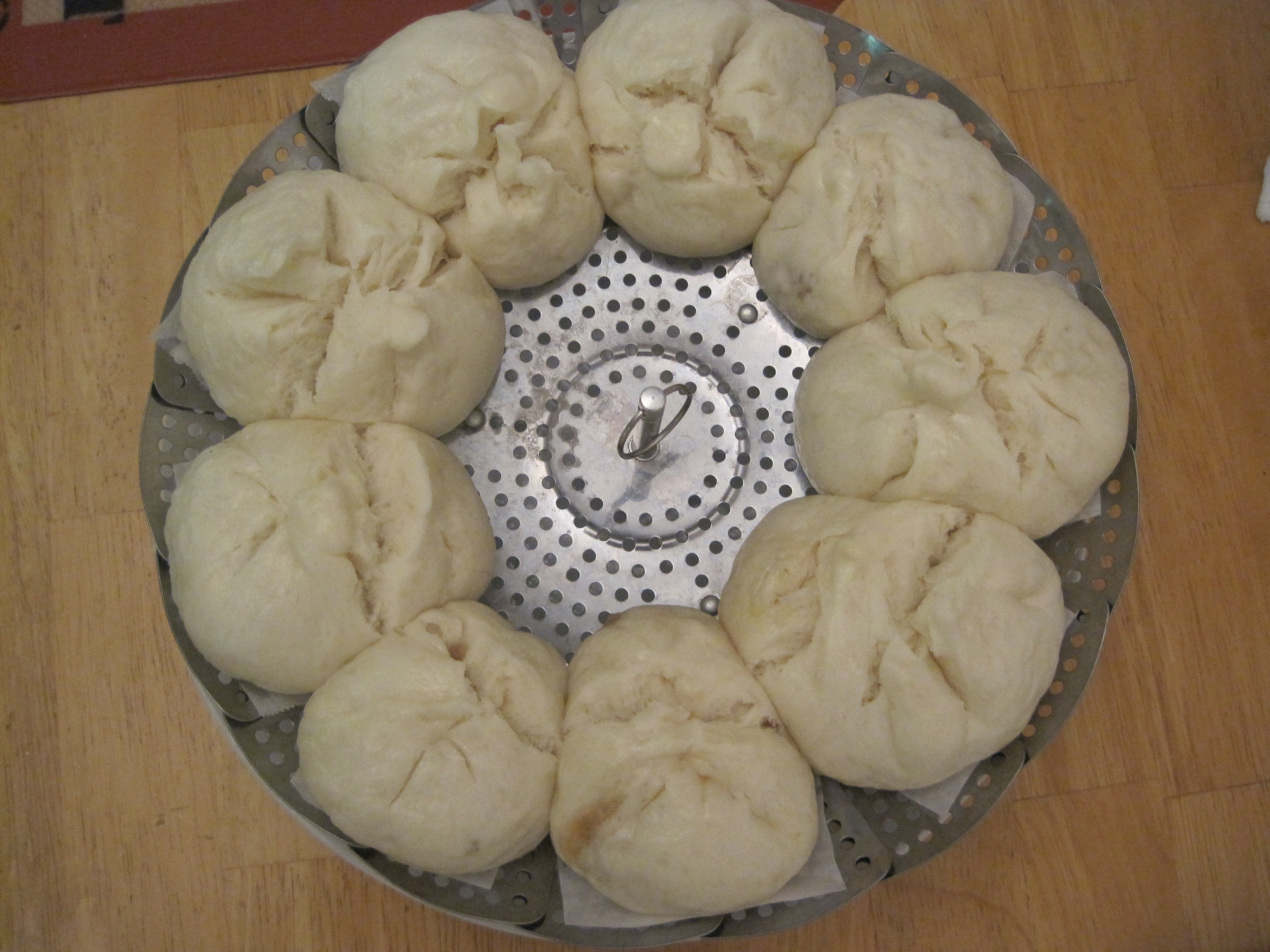
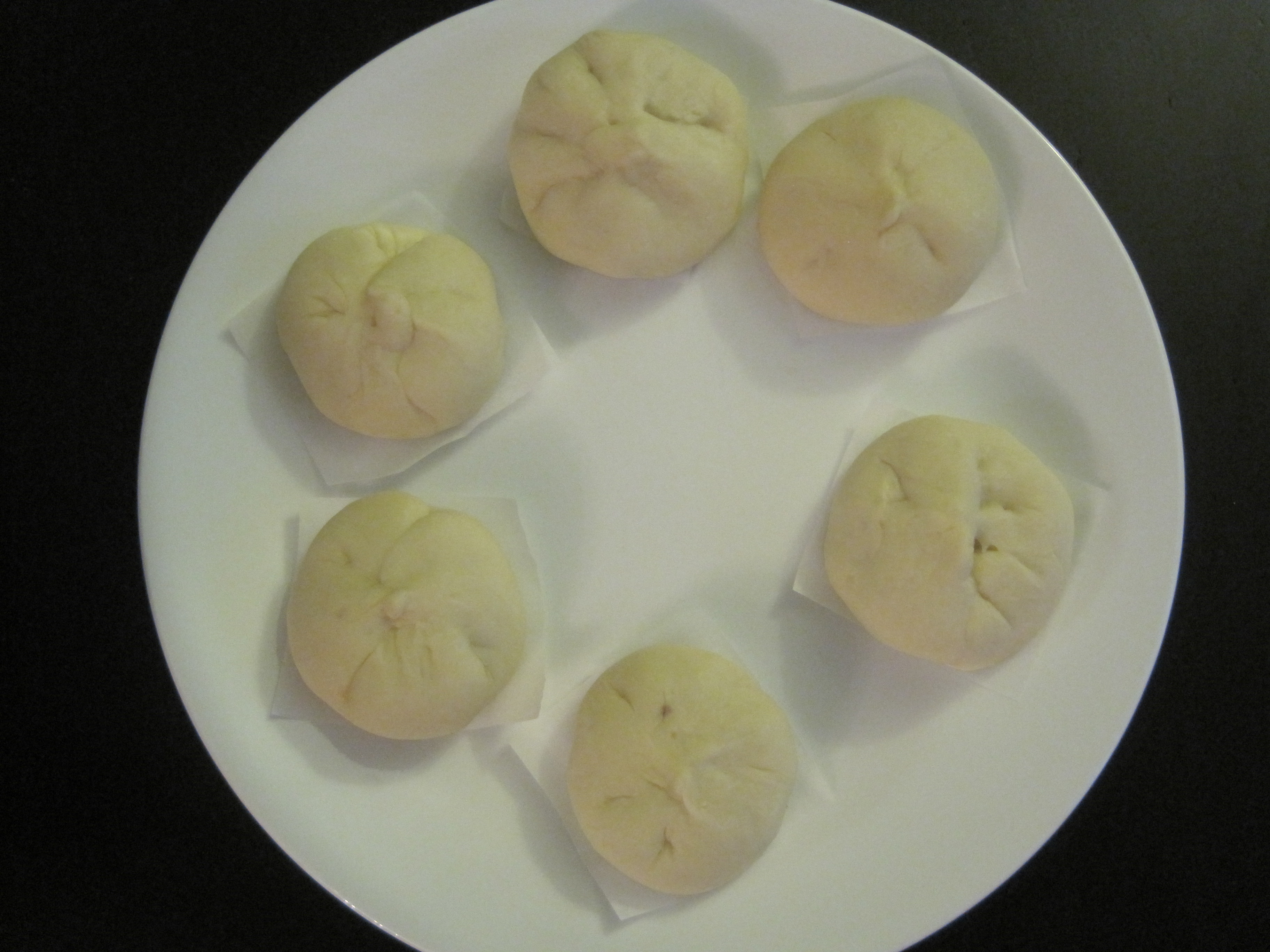
Steamed Chinese BBQ Pork Bun
In Dim Sum on March 29, 2010 at pmChinese BBQ pork buns (char siu bao) are a very popular Chinese dim sum dish. Dim sum refers to various types of small dishes that are served with tea during the meal, yum cha (“drinking tea time”), which starts early in the morning and ends between noon and 3 pm, depending on the restaurant. (Check out the other dim sum recipes that I have posted in the Asian – Dim Sum category.)
Chinese BBQ pork buns were the first steamed buns that I ever made from scratch. I couldn’t believe how well they turned out. The buns are soft and fluffy, and just like the restaurants’. I’ve been making steamed buns ever since (check out my chicken steamed buns and pork steamed buns recipes). Note that the filling in the restaurants have red food colouring in them. You can do this at home too but I prefer not to.
For the baked BBQ pork buns that you can buy in Asian bakeries, see here.
Pictures below from top moving counter clockwise: steamed BBQ pork buns; buns before going into steamer; and buns after coming out of the steamer.
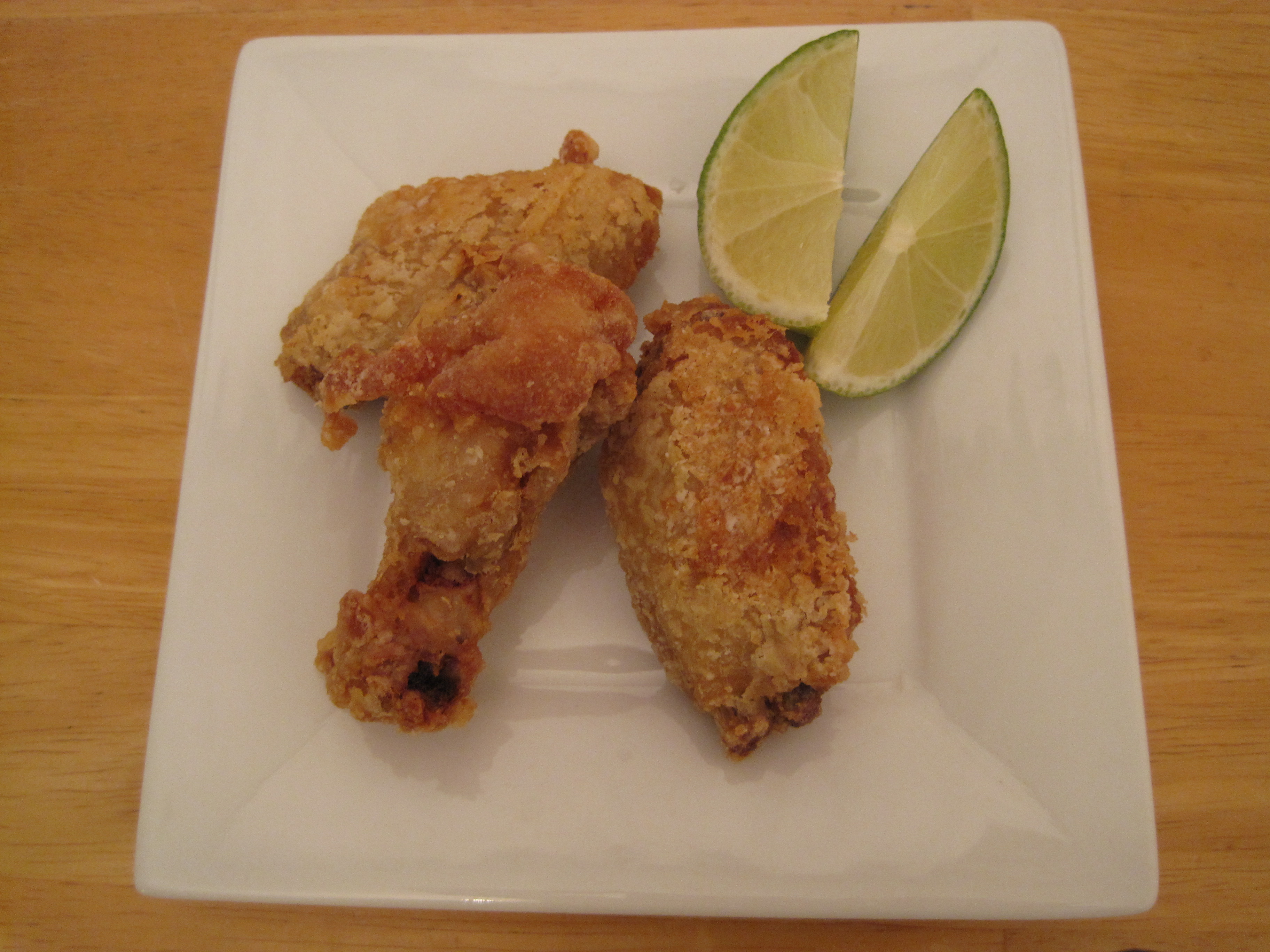
Vietnamese Deep Fried Wings
In Meat and Eggs on March 28, 2010 at pmI am in love with Asian deep fried wings, because they’re not battered like the ones you typically get in Western restaurants, bars or pubs. My favourite Asian wings come from a Vietnamese restaurant that my family and I have frequented for over a decade. We go only for their wings, which could not be any simpler. They’re deep fried until the skin is crispy, yet light, with perfectly moist meat, and they’re served with lime wedges and a dip that’s simply salt and pepper mixed together.
Stir Fried Spareribs
In Meat and Eggs on March 23, 2010 at pmAs you can tell, from the 2 other Chinese pork ribs recipes that I’ve posted, I really like fast-cooked ribs. This one is a family favourite. Note that this is not a saucy dish.
Chinese Steamed Egg Dish
In Meat and Eggs on March 20, 2010 at pmSteamed egg (or water egg) is a Cantonese dish that is served with rice alongside other dishes at dinner. It is a very light dish that is incredibly quick and easy to make. There are many variations that include combinations of dried scallops, dried shrimp, minced pork, soy sauce, and green onions. But my favourite variation is the three colour dish (referring to the three different types of eggs used). Note that the texture of the eggs in this dish is very soft, silky, and slightly watery. The flavour comes from the salted duck egg and preserved duck egg (also known as century old egg).
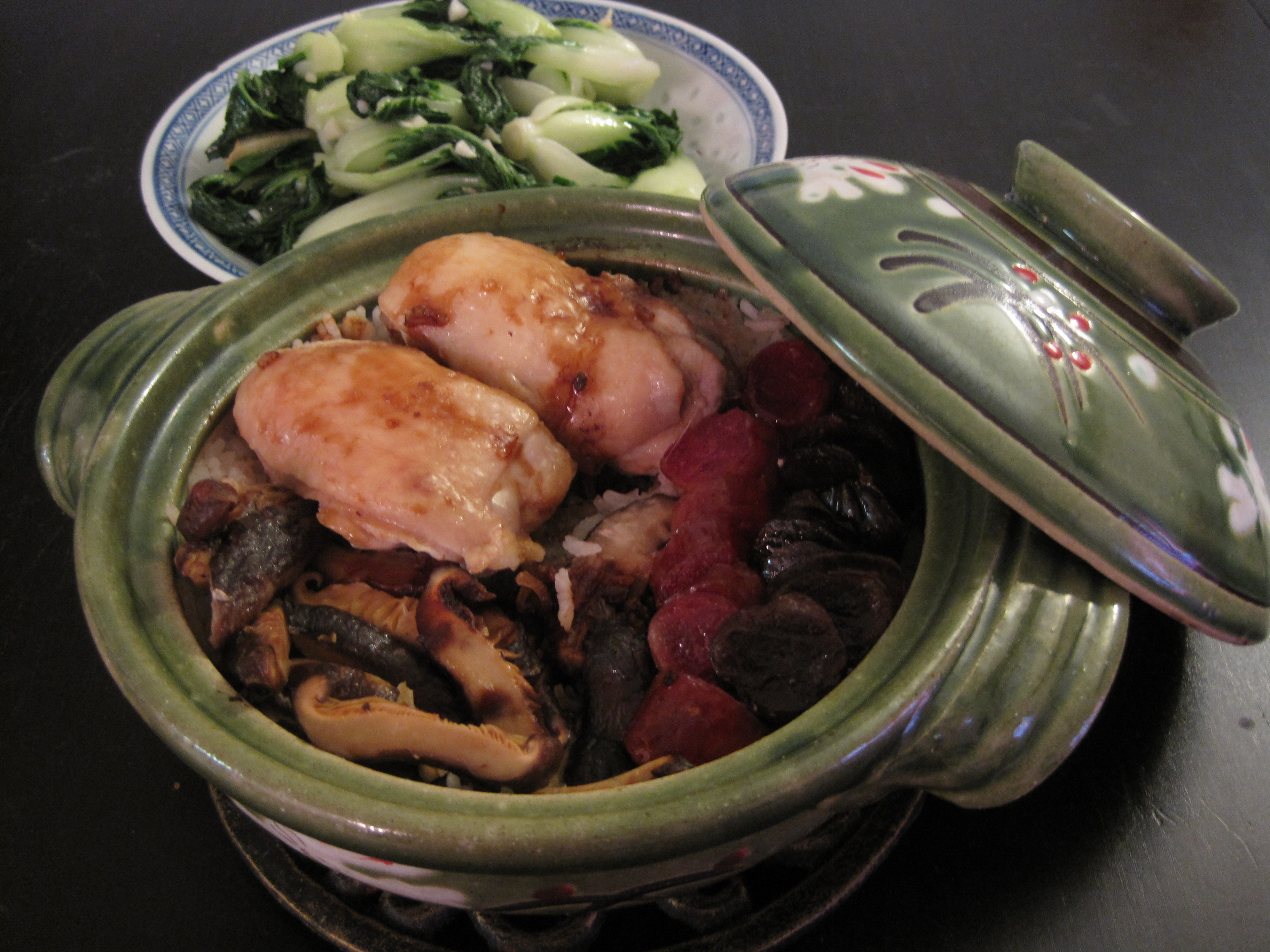
Claypot Rice
In Rice and Noodle Dishes on March 15, 2010 at pmYou can make one pot meals using Chinese clay pots. These rice dishes are some of my favourite foods. When done right, the bottom layer of rice is crispy and the top layer is beautifully flavoured with the juices from the meat and other toppings.
Mongolian Beef
In Meat and Eggs on March 14, 2010 at pmI have to admit that this is the only Mongolian dish that I make and other than Mongolian grill, I don’t know much about the cuisine. Eventually, I’ll cook my way through more Mongolian food, I’m sure. I like the sauce of this beef dish because it has a subtle sweetness to it that differs from other Chinese beef dishes.